 HSL Mobile App
 What is the Current Ratio?
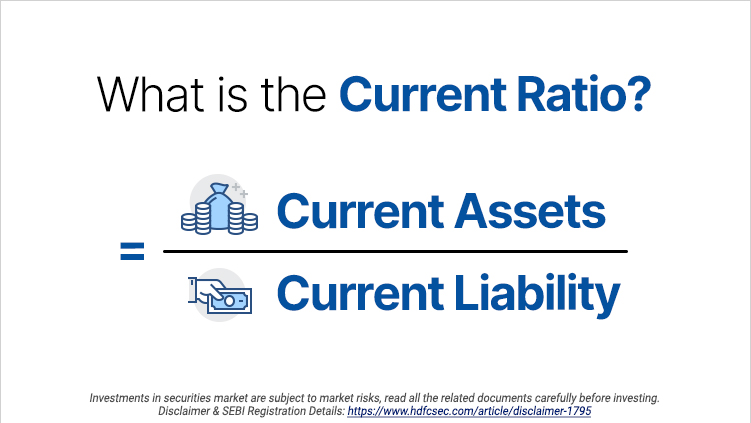
When making investment decisions in the stock market, it is critical for one to consider financial goals and risk appetite. Moreover, additional attention is needed to the financial health of the company one plans to invest in as it helps assess potential returns and associated risks.
The current ratio is an incredible financial metric that gives you a fair idea of the company’s liquidity. The ratio helps determine the company’s ability to pay off short-term obligations or those due within a year, by maximising its current assets. The article offers details about the current ratio formula, current ratio meaning and interpretation and how to calculate current ratio.
How is current ratio calculated?
Calculating a company’s current ratio is simple as you just need to know the company’s current assets and liabilities. The company’s current assets include cash, inventory, and receivables. The company’s current liabilities include debts, wages, taxation, and other payables. To calculate current ratio, divide current assets by current liabilities.
Use the below-mentioned current ratio formula for accurate calculations:
Current ratio = current assets
current liabilities
How is the current ratio interpreted?
The acceptable current ratio differs for every industry. However, generally, most investors having a short investment horizon, say 12 months, prefer investing in a company with a higher current ratio. A higher current ratio indicates that a company has more assets than liabilities. It shows a favourable liquidity situation and a higher possibility of repayment of short-term obligations within the stipulated time period.
A current ratio equal to 1 signifies no major liquidity-oriented concerns. On the other hand, a current ratio below 1 indicates that the company has fewer assets than liabilities. It means that the company may face cash flow concerns and may not be able to pay its short-term liabilities. Generally, a higher current ratio is considered to be better
Every company’s current ratio is compared to the industry’s average. If the current ratio is in line with the industry’s average, it is considered acceptable. However, a higher current ratio may not always show a positive picture. It can also indicate inefficient utilisation of current assets as the company may be stashing cash and not reinvesting it in the business.
What are the considerations to be made with the current ratio?
Remember that the current ratio merely gives a snapshot of the company’s financial health. Along with the current ratio, you must consider other factors as well. The company’s current ratio graph is a very important consideration. If a company’s present current ratio is 2, it may not necessarily be the same forever. It could either rise or drop.
Investing in a company whose current ratio is progressing with time is always better. You must consider the company’s quality of assets as well. If the company assets are of poor quality, liquidation issues are likely to arise. Hence, you must be mindful of the same. Thoroughly check the company’s financial health, current market standing, and growth potential to make an informed and profitable trade.
Related Posts
Don't miss another Article
Subscribe to our blog for free and get regular updates right into your inbox.
Categories


Subscribe for our
newsletter
newsletter
